
A marriage celebrated in France while a removal order (OQTF) is in progress does not produce the same legal effects as a marriage concluded in a regular situation. The central question for the couples involved is less about the possibility of getting married than about the timeline, the evidence to gather, and the real chances of obtaining a residence permit after the ceremony.
Package of prefectural decisions after marriage: what is actually contestable
Couples who discover immigration law after an OQTF often imagine a simple litigation, limited to the removal measure itself. The administrative reality is different. When a prefect issues an OQTF, they most often take a set of related decisions: refusal of residence, determination of the country of return, possible prohibition of return to French territory (IRTF).
Each of these decisions constitutes a separate administrative act, which can be challenged separately before the administrative court. The marriage that occurs after the notification of the OQTF does not make this package of decisions disappear. It offers an additional legal argument, based on the disproportionate impact on private and family life, but the burden of proof rests on the couple.
| Prefectural Decision | Effect of Subsequent Marriage | Possible Challenge |
|---|---|---|
| OQTF itself | No automatic annulment | Yes, before the administrative court |
| Refusal of residence permit | Basis for a new “private and family life” residence permit application | Yes, separate appeal |
| Return prohibition (IRTF) | Strengthened proportionality argument | Yes, separate appeal |
| Determination of the country of return | No direct impact | Yes, separate appeal |
The couple considering regularization after OQTF and marriage must therefore treat each decision as an autonomous legal front, which requires a rigorous timeline and evidence tailored to each appeal.

Residence permit “private and family life” after marriage: the criteria the prefect examines
Marriage to a French national theoretically entitles one to a “private and family life” residence permit based on Article L. 423-1 of the CESEDA. When this marriage occurs after an OQTF, the prefect has an expanded discretionary power and the review focuses on several cumulative elements.
Decisive elements of the prefectural file
- The actual duration of cohabitation since the marriage: a few weeks are not enough; the prefecture expects tangible evidence of an established common life (joint lease, bills, joint accounts).
- The reality of the relationship before marriage: correspondence, dated photos, testimonies from relatives can demonstrate that the couple existed before the removal measure.
- The presence of children, especially French children, which significantly strengthens the proportionality argument before the administrative judge.
- The level of integration in France: employment, proficiency in the language, documented social ties.
Marriage alone does not guarantee the issuance of a residence permit. Being the spouse of a French national does not provide automatic protection against removal. The administrative judge applies a proportionality review between the OQTF measure and the infringement of private and family life protected by Article 8 of the European Convention on Human Rights.
Irregular entry and subsequent marriage: a ground for OQTF that persists
A technical point often misunderstood deserves particular attention. When the OQTF has been issued based on irregular entry into French territory, the subsequent marriage does not eliminate this legal ground for removal. The irregularity of the entry remains an established legal fact, independent of the evolution of the family situation.
However, the marriage can modify the judge’s assessment of the proportionality of the measure. The administrative court then examines whether the execution of the OQTF would disproportionately infringe on the right to respect for family life, considering the couple’s situation at the time of its ruling.
This distinction between the ground for the OQTF (which persists) and its consequences (which may be deemed disproportionate) is the pivot of the litigation. A solid case does not seek to deny the initial irregularity but to demonstrate that the removal would, under current circumstances, constitute an excessive infringement of private and family life.
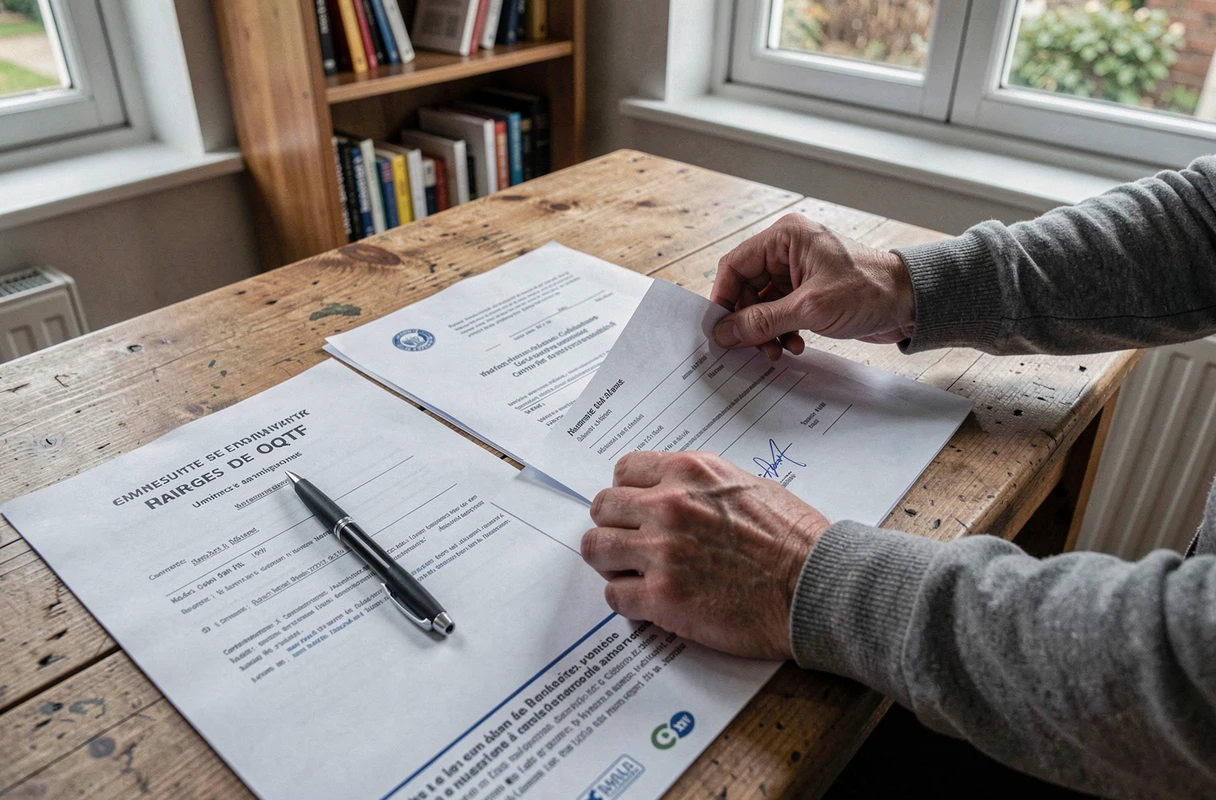
Timeline and evidence: what distinguishes an admissible file from a rejected one
The factor of time plays a decisive role in this type of litigation. A marriage celebrated a few days after the notification of the OQTF will be scrutinized with increased suspicion, both by the prefecture and by the court. The temporal proximity between the removal measure and the ceremony may fuel suspicion of a sham marriage.
Evidence to gather before and after the ceremony
Case law values elements that attest to a relationship existing prior to the OQTF. Exchanges of messages, documented joint stays, introductions to respective families constitute a foundation. After the marriage, the community of life must be proven by official documents: joint tax notices, lease signed by both spouses, certificate from the family allowance fund.
The deadline for appealing against the OQTF itself remains a parameter not to be overlooked. Depending on whether the OQTF is accompanied by a voluntary departure deadline or not, the time frame for bringing the case before the administrative court varies. Missing this deadline closes off a path of challenge, even if the marriage has been celebrated in the meantime.
An appeal filed after the deadline will not be examined on its merits, regardless of the strength of the evidence of cohabitation. The legal timeline takes precedence over the sentimental timeline, and it is often on this discrepancy that cases fail.
Marriage after an OQTF remains a right guaranteed by French law and the European Convention on Human Rights. However, this right to marry only transforms into a right to reside if the file demonstrates a real, prior, and lasting family life.
The prefecture and the administrative judge assess each situation on a case-by-case basis, without automatism. The couple that anticipates the gathering of evidence and respects the deadlines for appeals places itself in the best position in the face of litigation that does not forgive improvisation.