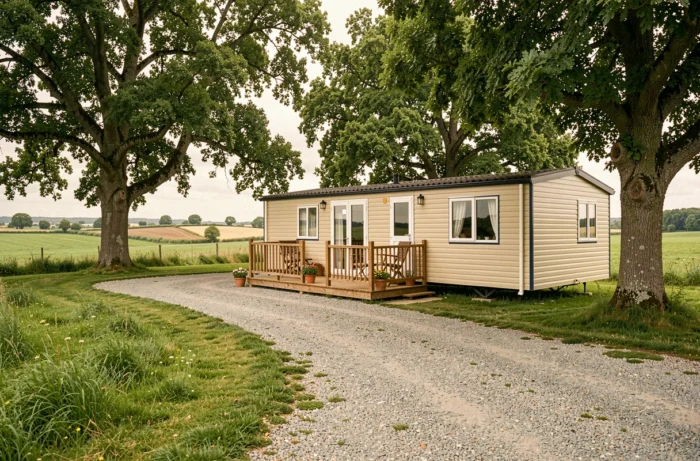
A mobile home owner in Vendée decides to sell their property after eight years of use. The campsite informs them that the pitch contract will not be renewed and that they will have to move the structure at their own expense. The mobile home, which has lost a significant part of its value, becomes almost unsellable on-site. This scenario, common in seasonal campsites along the Vendée coast, illustrates the fragility of a setup where one owns the mobile home without controlling the land.
Campsite pitch contract in Vendée: the clause that changes everything at resale
Most buyers focus on the price of the mobile home and the annual rent of the plot. The document that truly conditions the long-term value of the property is often overlooked: the pitch contract. This contract, usually annual and renewable, sets the conditions of occupancy, maintenance obligations, exit fees, and in many cases, the terms of transferring the mobile home on-site.
Some campsites impose a resale clause that requires the owner to go through the manager for any transaction. The campsite then takes a commission, sometimes substantial, or imposes a price ceiling. Others outright refuse to allow a mobile home over a certain age to remain on the land, forcing the owner to remove the structure.
Before signing anything, one must demand a full reading of the pitch contract and check three specific points:
- The duration of the contract and the renewal conditions (tacit or subject to the manager’s agreement)
- The clauses governing the resale of the mobile home on-site (commission, buyer approval, maximum age of the structure)
- The exit fees in case of non-renewal (moving costs, restoration of the plot, potential penalties)
A well-negotiated pitch contract protects resale. A vague or restrictive contract can turn a purchase into a financial deadlock. The sale of land for mobile homes in Vendée also involves options in residential leisure parks, where the power dynamics with the manager are different.
Seasonal campsite or PRL in Vendée: two statuses, two levels of security
The distinction between classified campsites and residential leisure parks (PRL) is still poorly understood by many buyers. However, it conditions the level of control over the plot and the actual duration of occupancy.
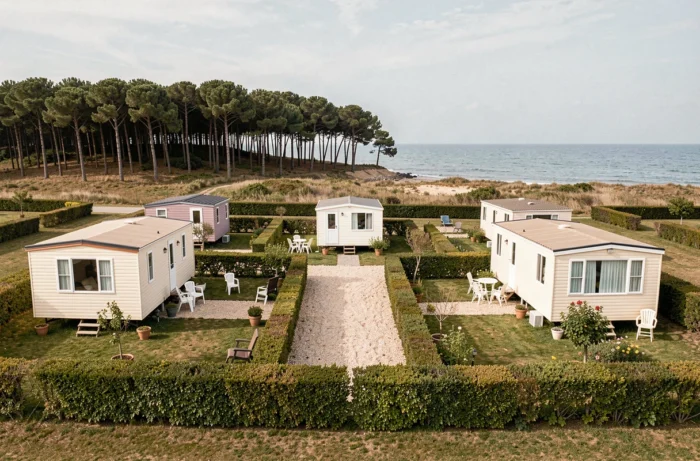
Plot in a classified campsite
In a campsite, one rents a pitch from the manager. The land does not belong to us. The pitch contract is the only guarantee of occupancy. The campsite can decide to change its commercial strategy, renovate the park, or simply not renew the lease. The owner of the mobile home then finds themselves without any real recourse regarding the land.
Seasonal campsites, open for only a few months a year, further limit the usage period. Year-round campsites offer greater flexibility, but the legal status of the land remains the same: one is never truly at home.
Plot in a residential leisure park
In PRL, two setups coexist. In some cases, the buyer becomes the owner of the plot, fundamentally changing the situation. The plot is subject to a notarial deed, with a proper land ownership title. The mobile home installed on it can be resold freely, without commission or manager approval.
In other PRLs, the plot remains rented through a long-term lease. This lease offers better visibility than an annual campsite contract, but does not confer ownership of the land. Feedback varies on this point among Vendée PRLs: some leases last several decades, while others are shorter and renegotiable.
Actual budget of a mobile home in Vendée: beyond the purchase price
The displayed price of a mobile home represents only part of the total cost. A used mobile home in Vendée is negotiated between €8,000 and €45,000 depending on age, size, and condition. A new model placed on a plot can reach €30,000 to €75,000.
In addition to this amount, recurring fees that many buyers underestimate are added:
- The annual rent of the plot, which ranges from €3,000 to €8,000 depending on the location and classification of the campsite
- Water, electricity, maintenance of common areas, and tourist tax charges
- Insurance for the mobile home, mandatory in most establishments
- The depreciation of the property, which reaches 30 to 40% in five years for a standard mobile home
The all-inclusive annual cost is between €5,500 and €12,000 according to available sources. When compared to the number of weeks of actual use, the cost per night can exceed that of a traditional seasonal rental if the mobile home is only used a few weeks a year.
Documents to request before signing a plot sale in Vendée
Too many buyers sign based on a visit and an attractive price. Three documents must be requested and read before any commitment.
The urban planning certificate from the municipality confirms the zoning of the plot and any easements. It allows verification that the installation of a mobile home is indeed authorized on the targeted land. The internal regulations of the campsite or PRL detail the owner’s obligations, usage restrictions, and resale conditions.
The natural risk prevention plan (PPRN) is the most often ignored document. In the Vendée coastal area, certain plots are classified as flood or submersion risk zones. This classification can limit occupancy possibilities or even prohibit the permanent installation of a mobile leisure residence.
One last point deserves attention: the law prohibits living in a mobile home year-round on non-buildable private land. The fine is set at €1,200 per square meter. This constraint effectively excludes installation on agricultural or natural land, even if the purchase price seems attractive.
The Vendée market for plots with mobile homes offers real opportunities, provided that the purchase is treated as a structured project. The choice between campsite and PRL, careful reading of the pitch contract, and verification of urban planning documents make the difference between a controlled investment and a source of lasting complications.