
Since the Labor Law of 2016 and its implementing decree of 2017, the electronic delivery of payslips has been the default mode in France. This shift has generalized the use of digital safes like Arkevia. The system promises to preserve documents for at least 50 years or until the employee reaches 75-76 years of age.
Behind this promise, several questions deserve to be raised about the actual rights of the employee, the robustness of daily access, and the responsibilities that fall on the employer.
Employee’s right to object: a often overlooked lever in the dematerialization of payroll
The transition to electronic payslips does not require the explicit consent of the employee. The employer can unilaterally decide to dematerialize, provided they inform the staff in advance. This asymmetry creates a frequent misunderstanding.
However, the employee retains a right to object at any time and without justification. This right, provided by the Labor Code, allows a return to paper format. It is exercised by a simple written request to the employer or the HR department. No waiting period is imposed, and the objection can occur as soon as the system is implemented or several years later.
In practice, this right remains little exercised. Many employees are unaware that they can refuse dematerialization. Internal information campaigns often consist of a letter or a notice on the intranet, without explaining the concrete modalities of objection. The result: employees discovering their Arkevia digital safe without feeling they had a choice.
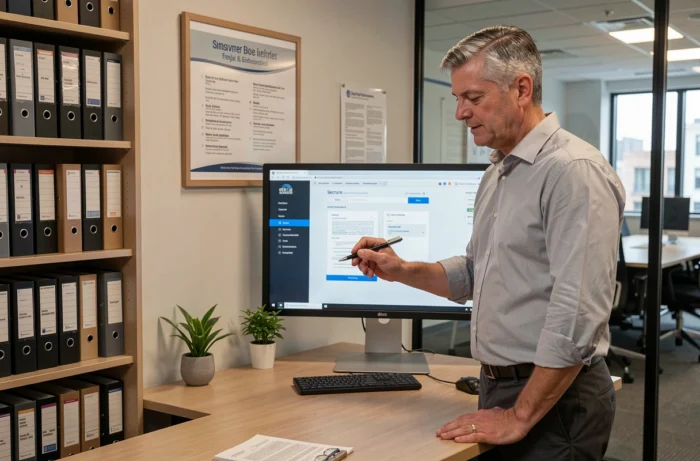
Actual accessibility of the Arkevia safe: what field feedback says
The technical promise of Arkevia relies on GDPR-compliant certified archiving, AES-256 level encryption, and timestamping that guarantees the integrity of documents. On paper, the system ticks all the regulatory boxes. User feedback tells a different story.
Since 2025, several review platforms have reported a notable degradation of the access experience for employees. Recurring difficulties relate to account login, the procedure for retrieving credentials, and the responsiveness of customer support. On Trustpilot, the ratings given to the service are particularly low.
By detailing the Arkevia safe for employees, it becomes clear that the issue does not lie in the legal value of the archived documents, but in the practical ability of the employee to access them on a daily basis. An inaccessible safe remains a safe, but it no longer fulfills its intended function.
Points of friction identified by users
- Loss of access after a change of professional email address, without a clear migration procedure to a personal address
- Response time from technical support deemed excessive, sometimes taking several weeks for a simple password reset
- Interface perceived as less intuitive than mainstream online storage solutions, which discourages some employees from regularly consulting their documents
These difficulties raise a fundamental question: is legal compliance sufficient if effective access is not guaranteed smoothly throughout the employee’s career?
Employer obligations regarding the retention and portability of payslips
The employer who opts for the dematerialization of payslips via Arkevia assumes specific responsibilities. The first concerns the retention period. The Labor Code requires the employer to keep a copy of the payslip for at least 5 years. The digital safe provider must ensure accessibility for the employee for at least 50 years or until they reach 75-76 years of age.
In the event of a change of provider or closure of the service, the employer remains responsible for ensuring continued access. This is a point that few companies anticipate when signing their contract. If Arkevia were to cease operations or change its terms, the employer would need to organize the migration of documents to another compliant solution.
Liability in case of document loss
The question of liability in the event of loss or prolonged inaccessibility of electronic payslips remains a legally uncharted territory. The texts impose an obligation of means on the provider and an obligation of result on the employer for the effective delivery of the payslip. However, the available data does not allow for conclusions regarding case law in the event of prolonged technical failure of a digital safe.
This legal ambiguity should prompt employers to verify several elements before deploying Arkevia:
- The reversibility clause in the contract with the provider, which guarantees data recovery in case of termination
- The existence of a documented procedure for the employee in case of loss of access, distinct from standard technical support
- The compatibility of the safe with the online service associated with the Personal Activity Account, to ensure the portability of payslips
Security of personal data and RGPD compliance of Arkevia
The Arkevia digital safe hosts sensitive data: payslips, employment contracts, certificates. AES-256 encryption protects these documents at rest and in transit. Certified timestamping ensures that each file deposited retains its evidential value in court.
Compliance with the RGPD requires that the employee can exercise their rights of access, rectification, and deletion regarding their personal data. In the case of a certified safe, the right to deletion comes into tension with the obligation of long-term retention. The employee can request the deletion of ancillary personal data, but not that of the payslips themselves as long as the legal retention period has not expired.
One point deserves attention: the personal email address is the key to permanent access to the safe. Employees who activate their account with their professional address expose themselves to a loss of access in case of leaving the company. This information, although documented, remains insufficiently highlighted during account activation.

The regulatory framework surrounding digital safes for payslips continues to evolve. Employers deploying Arkevia would benefit from addressing the issue of accessibility with as much rigor as that of legal compliance. An archived payslip for 50 years only protects the employee if they can effectively consult it when needed.