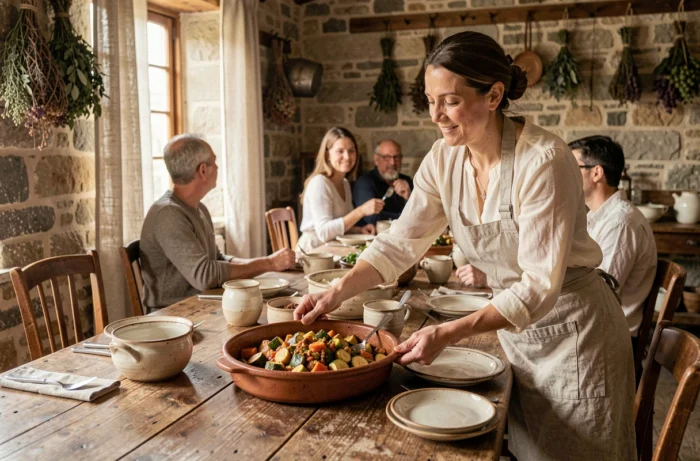
The format of the host table in guesthouses is undergoing a silent transformation. For several years now, the boundary between charming accommodation and culinary destination has blurred. Renowned chefs are opening their own homes, passionate hosts are structuring their offerings around meals, and customers now choose a place as much for what they eat as for where they sleep. This evolution is redefining the culinary experience in guesthouses.
When the host table becomes a standalone culinary destination
The classic model placed the meal as an ancillary service, a complement to the overnight stay. This scheme no longer reflects what is happening on the ground. Several guesthouses today operate as destination restaurants with rooms, where the reputation of the cuisine attracts local clientele who do not stay overnight.
David Gallienne, for example, opened Ô Plum’Art in the former milkman’s house in Giverny. Six rooms, an intimate atmosphere, and a dining experience that is at the heart of the project. The experience of rejuvenation comes as much from the plate as from the place. This type of hybrid format is multiplying, driven by chefs seeking an alternative to traditional restaurants.
This logic changes the game for travelers. Booking a night Chez Agathe means accessing a meal designed as a central moment of the stay, not as a backup option. The cuisine shapes the identity of the house, from breakfast to dinner.
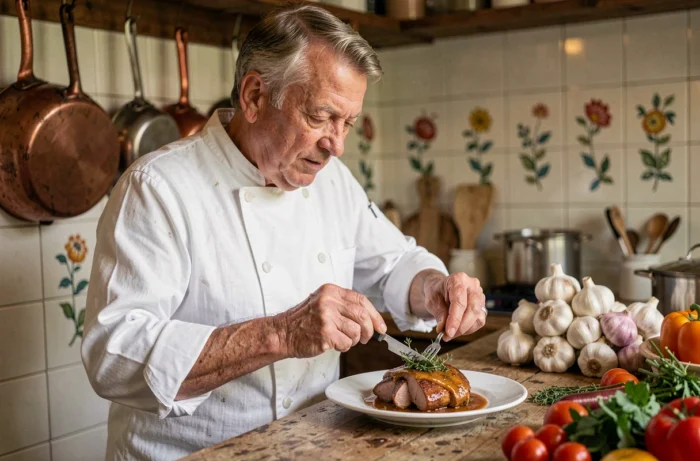
Local products and guesthouse cuisine: what distinguishes an authentic meal
The word “authentic” is used everywhere. It deserves to be broken down. In a guesthouse, culinary authenticity relies on concrete criteria that can be verified before booking.
Markers of a sincere host table
- Short supply chains: products come from identifiable producers, often named on the menu or presented during the meal. Some houses cultivate their own vegetable gardens
- Unique imposed menu: unlike a restaurant, the host table offers a single menu, often with multiple courses. This format forces the cook to work with what they master, using products available that day
- Strict seasonality: the menu changes weekly according to arrivals. A dish served in September will not resemble one served in March, even in the same house
- Shared dining: guests eat with other diners, sometimes at the same table. This format creates a dynamic that traditional dining does not replicate
These elements are not marketing arguments. They determine the very nature of the meal. A guesthouse that buys its vegetables from the same wholesaler as a downtown brasserie does not offer a different culinary experience, regardless of the setting.
Culinary tourism in France: the growing role of guesthouses
Culinary tourism is increasingly influencing the choice of accommodation. What was once a secondary criterion (the quality of meals) is becoming for a growing number of travelers the main reason for booking. Guesthouses are capturing this demand because they offer what standardized hotels struggle to produce: a direct link between the territory and the plate.
In Burgundy, Provence, Brittany, or the Médoc, some guesthouses build their identity around regional flavors. Field feedback varies on the quality level from one establishment to another, but the underlying trend is clear: the meal is becoming the primary vector of differentiation between two comparable charming accommodations.
What the gourmet traveler seeks
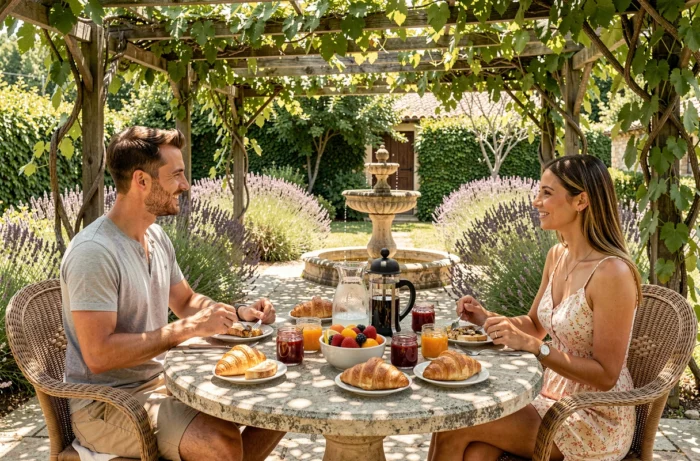
The clientele booking a stay for its table does not expect a restaurant service. They expect a culinary experience integrated into the place. Dinner begins with a visit to the vegetable garden or a meeting with the neighboring cheese producer. Breakfast extends this logic with homemade jams, freshly baked bread, and farm dairy products.
This continuum between the territory, cuisine, and accommodation constitutes the real value proposition of a guesthouse with a culinary focus. The available data does not allow for precise quantification of the share of culinary tourism in guesthouse bookings in France, but the recent openings by renowned chefs in this format indicate that the market is responding to structured demand.
Choosing a guesthouse for its cuisine: criteria to check
Not all establishments that advertise “host table” offer the same level of culinary commitment. A few elements can help sort through options before booking.
The first indicator is the frequency of menu changes. A menu that remains unchanged for several months signals a classic restaurant operation, not a market-driven kitchen. In contrast, a menu that changes weekly, or even with each service, reflects a focus on fresh products.
The second criterion concerns the chef’s background. Professional training or experience in a restaurant does not guarantee quality, but it indicates a technical relationship to cooking. Some guesthouses are run by chefs who have deliberately left traditional restaurants to work in a more intimate setting.
The third point, often overlooked, is the number of covers per service. A host table that accommodates six to twelve guests does not operate like a thirty-seat dining room. The size of the service conditions the quality of attention given to each plate and each guest.
The mention of local suppliers on the website or in reviews serves as an additional signal. A host who specifically names their farmer or producer commits to the traceability of what they serve.
Ultimately, the choice of a guesthouse for its table rests on a simple arbitration: prefer a place where the cuisine is a project rather than a service. Establishments that place the meal at the center of their identity do not hide it. One just needs to read between the lines of their presentation to distinguish a true culinary proposal from a convenient dinner.