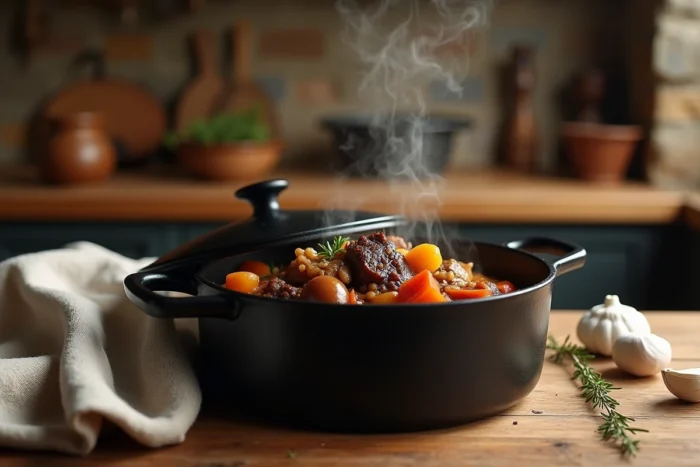
A cast iron pot is placed on a high heat to sear a roast, then the heat is lowered for three hours of braising, and the result depends as much on the technique as on the utensil. Choosing the right cast iron pot starts with identifying what you actually cook, how often, and for how many people. A poor choice of size or coating turns a durable purchase into a bulky item that stays in the cupboard.
Raw cast iron or enameled cast iron: what it changes in cooking
The distinction between raw cast iron and enameled cast iron is not just aesthetic. It directly alters how you work with the pot on a daily basis.
Raw cast iron requires regular seasoning: a thin layer of fat is applied and heated to create a protective patina. This seasoning improves over time and provides an increasingly non-stick surface. Lodge, for example, documents the use of its raw cast iron pots in both home cooking and cooking over wood fire or barbecue, with embers placed on and under the lid.
Enameled cast iron, like that found at Le Creuset or Staub, eliminates this step. You can prepare acidic dishes (tomatoes, white wine, citrus) without risking a reaction with the metal. Cleaning is simpler: hot water, soft sponge, and you’re done. In return, the enamel can chip in case of a sudden thermal shock or drop, and replacement is not an option.
To compare the models and ranges available, you can consult https://www.une-cocotte-en-fonte.com, which gathers detailed sheets by type of pot.
Specifically, if you primarily cook stews, soups, or bread, enameled cast iron is perfectly suitable. If you want to sear meat at very high temperatures or cook outdoors over an open flame, raw cast iron offers a versatility that enamel does not allow.
Weight of the cast iron pot: a criterion that is underestimated
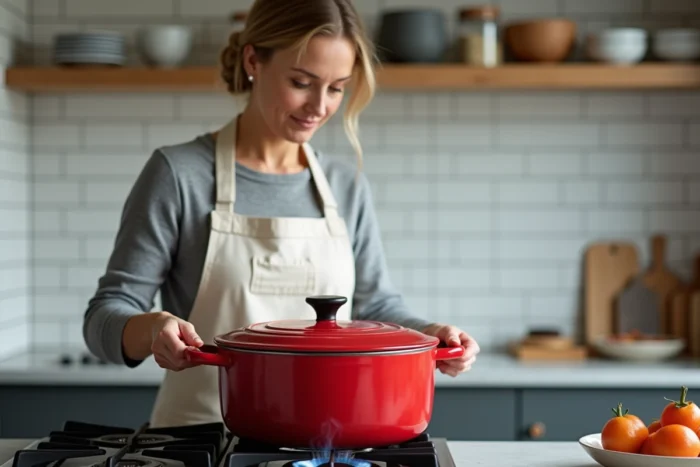
A family-sized cast iron pot is heavy. Heavy enough that handling it becomes a real issue, especially when it is full. Taking a dish out of the oven with a utensil that already weighs several kilos empty requires a firm grip and suitable handles.
There is also a rise in aluminum cast iron pots, positioned as lighter alternatives. These models maintain good heat distribution for slow cooking while significantly reducing weight. For people with back problems or mobility issues, this is a factor that weighs (literally) in the decision.
Feedback varies on this point: some find that aluminum cast iron heats less evenly during long cooking, while others notice no significant difference in a three-hour braise. What matters is to lift the pot in the store before buying. A model that cannot be comfortably handled empty will not be more pleasant filled with beef bourguignon.
Check the handles and the lid
Wide handles make it easier to grip with thick oven mitts. A heavy and well-fitting lid limits evaporation and keeps moisture inside the pot during cooking. Some lids have internal spikes that redistribute condensation as fine rain over the food, improving the results of braises.
- Wide and slightly curved handles for a stable grip even with oven gloves
- Hermetic lid that does not let steam escape from the sides
- Heat-resistant lid knob (some plastic knobs impose a temperature limit)
Choosing the size of a cast iron pot according to your dishes
The size should be chosen based on the number of usual guests, not the exceptional meal you prepare twice a year. A pot that is too large for daily use wastes energy and prolongs heating time. If it’s too small, it overflows or prevents even cooking.
- For two people, a compact size is sufficient for stews, soups, or gratins
- For four to six people, an intermediate size covers most family recipes (roasts, stews, tagines)
- Beyond six guests, you move to a large size, but weight becomes a limiting factor to consider
Round or oval pot: a choice dictated by what you cook
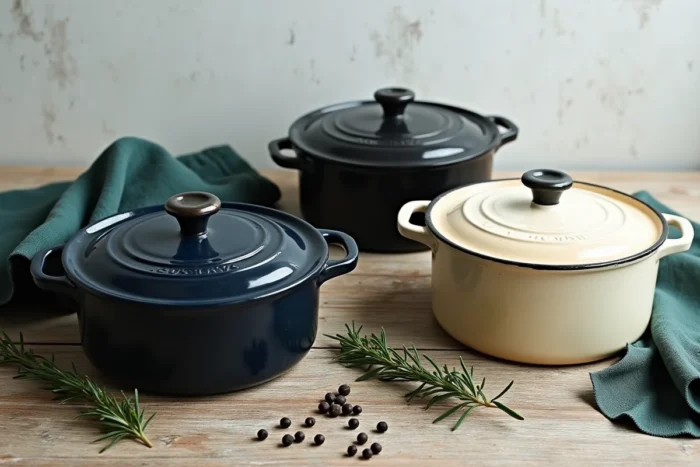
The round pot is the versatile format. It centers well on a burner, distributes heat evenly, and is suitable for soups, stews, and sauce cooking.
The oval pot makes sense when cooking elongated pieces of meat: a whole chicken, a veal roast, a leg of lamb. It also fits better in the oven if the space between the racks is limited in height. However, on an induction cooktop, the oval shape often exceeds the heating zone, creating cold spots at the ends.
Compatibility with induction cooktops and the oven
All cast iron pots (raw or enameled) work on induction because cast iron is a ferromagnetic material. There is no need to check compatibility on this point. What deserves attention is the diameter of the bottom in relation to the cooking zone: a bottom that is too small does not activate some cooktops, while a bottom that is too large overhangs and heats poorly.
For oven use, almost all cast iron pots can withstand high temperatures. The limit often comes from the lid knob. Models with a stainless steel or cast iron knob can go in the oven without restriction. Those equipped with a bakelite or plastic knob impose a temperature ceiling that must be respected to avoid deformation.
Buying a cast iron pot means choosing a utensil that lasts for decades if you follow a few simple maintenance rules. The purchase price is spread over years of daily use, making it one of the best investments in the kitchen. It’s better to have one model suited to your habits than a collection of poorly chosen pots.