Your dog has just been neutered and, by the evening, he is wagging his tail as if nothing has happened. This apparent energy is misleading. Beneath the skin, the deep tissues have not yet healed. The duration of rest after neutering is not determined by observing the animal’s behavior, but by following a precise schedule related to the actual healing of the wound.
Why the dog’s apparent energy does not reflect its healing
After the procedure, the veterinarian prescribes analgesics that mask the pain for several days. As a result, some dogs want to run, jump, or play the very next day. This liveliness does not mean that the incision is closed deeply.
The muscle and subcutaneous layers take longer to consolidate than the visible surface of the skin. A sudden effort (jumping on the couch, running in the garden) can cause the wound to open or an internal hematoma, even if the outside looks clean.
The veterinary follow-up appointment remains the only reliable indicator to know if the healing is sufficiently advanced. Relying on the dog’s attitude is the first mistake most owners make. To better understand the recommended rest time after neutering according to Boule de Poil, one must first distinguish the phases of recovery.
Rest duration after neutering: the actual schedule
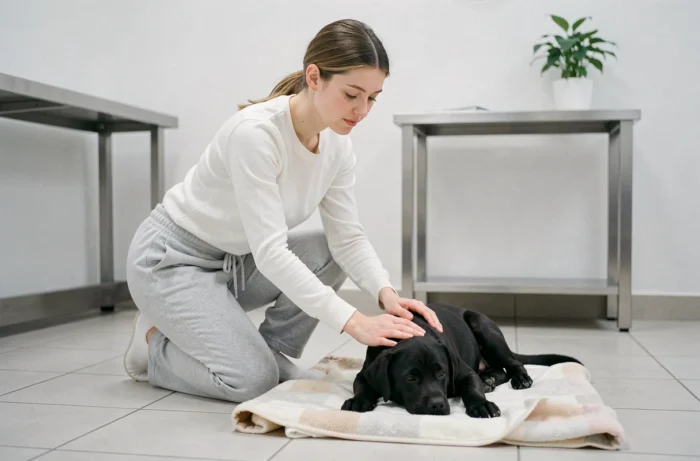
The vast majority of recent veterinary protocols agree on a period of strict restriction of 10 to 14 days. This timeframe corresponds to the time necessary for the internal and skin sutures to hold without risk of coming undone.
The first 48 hours
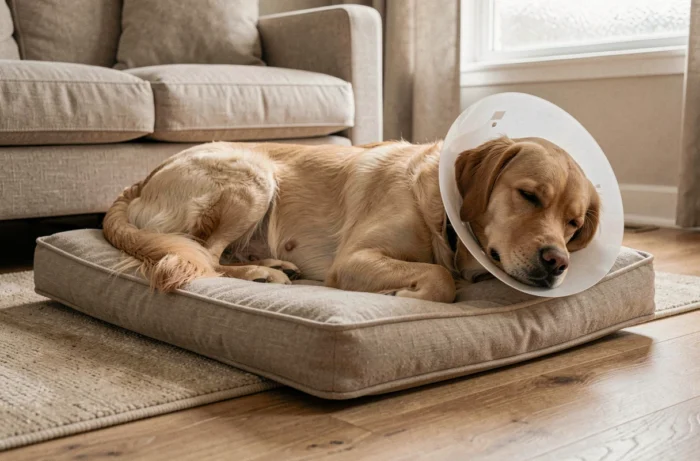
The dog is still under the residual effects of anesthesia. He sleeps a lot, eats little, and may seem disoriented. This is normal. Set him up in a quiet place, protected from drafts, with easy access bedding (no elevated bed that requires jumping).
Outings are limited to a few minutes on a short leash, only for bathroom needs. No walks, no free access to the garden.
From the second day to the tenth day
Appetite returns, and so does energy. This is the most delicate phase to manage, as the dog feels better but the scar is not yet deeply consolidated. Throughout this period:
- Jumping, running, playing with other animals, and going up or down stairs remain prohibited
- Walks are done on a short leash, on flat ground, without pulling
- Confinement in a quiet room (or a suitable crate for large dogs) is recommended when you cannot supervise the animal
After the veterinary check-up
Around the tenth or fourteenth day, the veterinarian examines the incision. If the healing is satisfactory, activity can gradually resume. Not overnight: the duration of walks is increased over one to two weeks before returning to the normal pace.
Neutering males or females: different timelines
Have you noticed that the guidelines vary according to online articles? The reason is simple: spaying a female dog is a more invasive abdominal surgery than neutering a male.
In males, the incision is located in front of the scrotum. The procedure is quicker, and the wound is smaller. Most male dogs return to almost normal behavior within a few days, but activity restriction remains necessary for at least a week.
In females, the veterinarian performs an ovariectomy (removal of the ovaries) through an abdominal incision along the white line. The tissues involved are thicker, and the suture is deeper. Closer monitoring is required, and the recovery period often reaches a full 14 days.
Puppies, large dogs, or animals that have undergone more complex procedures also fall outside the standard timeline. In these cases, the veterinarian adjusts the guidelines to the animal’s profile.
Warning signs regarding the wound after neutering
Monitoring the incision daily is as important as respecting the rest period. Here are the signals that justify a call to the veterinarian without delay:
- Redness spreading around the wound instead of decreasing, unusual swelling, or oozing
- Discharge of colored liquid (yellow, green, or bloody) from the incision
- The dog licks or nibbles the area compulsively despite the collar
- Fever, persistent loss of appetite beyond 48 hours, or sudden apathy after a phase of normal recovery
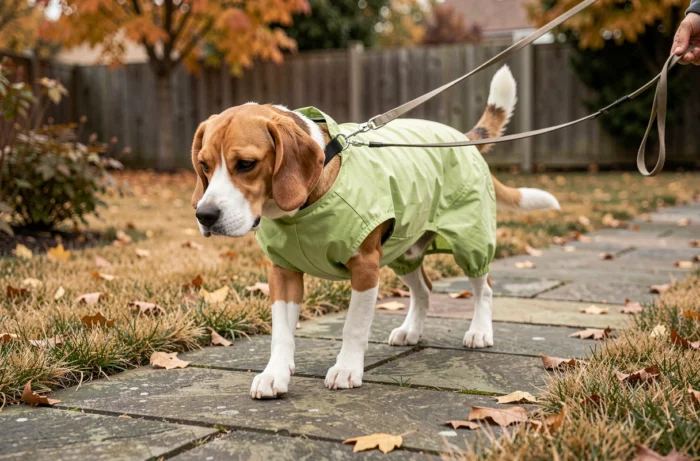
A wound that seemed clean can become infected within hours if the dog manages to remove its protective device. The collar (or protective suit) must remain in place throughout the healing period, including at night.
Feeding and hydration during the dog’s recovery
On the evening of the procedure, offer a small amount of food (one-third of the usual ration) with fresh water. Anesthesia can cause nausea: there is no need to force if the dog refuses to eat.
From the next day, resume normal meals. Split the ration into two or three servings during the first few days to facilitate digestion. The animal moves less, so its energy needs temporarily decrease. After the recovery period, discuss with your veterinarian any potential dietary adjustments, as neutering alters metabolism in the long term.
Bathing and any immersion should be avoided until the wound is completely closed. Moisture softens healing tissues and promotes infections.
Neutering remains a common and well-managed surgery. The rest phase that follows, although it requires patience, protects your dog from complications that would significantly prolong its recovery. Ten to fourteen days of restriction are better than several weeks of additional care after a reopened wound.