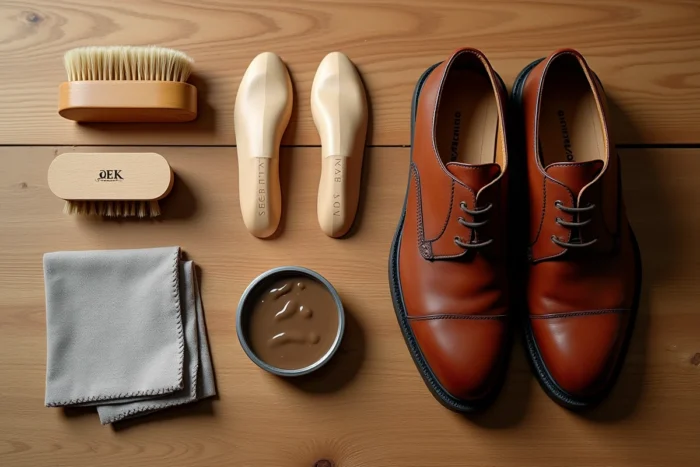
A new pair of shoes looks great. A few weeks later, the leather dulls, the sole sags, and the laces fray. The problem rarely comes from the shoe itself. What’s missing are the right gestures and tools to prolong its lifespan. A few well-chosen accessories can make a difference, both in appearance and daily comfort.
Cedar Wood Shoe Trees: The Reflex Few People Adopt
Have you noticed that your leather shoes deform after a few months? Leather, when drying after a day of wear, shrinks and loses its original shape. A wooden shoe tree corrects this phenomenon by maintaining the shoe’s structure while at rest.
Cedar wood serves two functions. It absorbs residual moisture (the sweat from your feet throughout the day). It then restores a regular shape to the leather by slightly stretching the upper. A well-fitted shoe tree visibly extends the life of the leather from the very first weeks of use.
The important detail: choose a spring-loaded shoe tree that fits the exact size. A model that is too small does not correct anything, while a model that is too large strains the seams. To explore the accessories offered by Oh my shoe, this type of technical reference helps quickly target the right product.

Replaceable Insoles: Comfort and Longevity of the Shoe
The insole originally supplied with a shoe is often a compromise. Thin and poorly cushioned, it wears out quickly. Replacing this insole with a more technical model transforms the comfort felt from the very first step.
Why this choice? A quality insole absorbs shocks and reduces foot fatigue over a full day. Memory foam versions mold to the arch of the foot after a few days of wear. Those made from vegetable leather regulate moisture better than synthetic insoles.
Criteria for Choosing a Suitable Insole
- Thickness: an insole that is too thick compresses the foot in the shoe, especially if the fit is snug. Prefer a thickness that does not alter the perceived size.
- Material: leather is suitable for dress shoes, cork for casual models, and technical foam for sneakers worn for long periods.
- Arch support: some insoles incorporate light arch support, useful for people who walk several hours a day.
This regular replacement also protects the outer sole. By absorbing some of the mechanical stresses, the insole slows down the wear of the main structure.
Leather Care: Cream, Polish, and Waterproofing
Maintenance is not a purist’s ritual. It’s a matter of simple chemistry. Leather is an organic material that dries out, cracks, and loses its flexibility without regular hydration. Three products cover most needs.
Nourishing Cream
The cream deeply hydrates the leather without altering its color. It is applied with a soft cloth in a thin layer, then left to absorb for about ten minutes. A treatment every two to three weeks is sufficient for regular wear.
Polish
Polish adds a layer of protection and revives the color. Unlike cream, it contains pigments and waxes that create a protective film on the surface. For black or dark brown shoes, a tinted polish fills in micro-scratches and unifies the appearance of the leather.
Waterproofing Spray
A waterproofing agent forms an invisible barrier against water and stains. Applying a waterproofing spray before the first outing protects the leather from the start. Monthly reapplication maintains effectiveness, especially in autumn and winter.
Brushes and Cloths: The Tools That Make a Difference
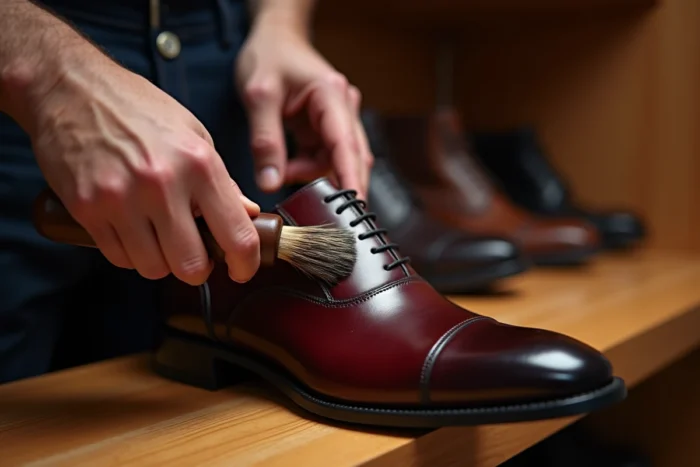
The best polish in the world won’t do anything without the right tool to apply it. Each step of maintenance requires a specific brush or cloth.
- The scrubbing brush (hard bristles, often nylon) is used to remove mud and dry residues before any product application. Rubbing dirty leather with cream embeds the dirt.
- The polishing brush (soft bristles, horsehair) is used after polishing to enhance shine through light friction. The motion is quick, in back-and-forth strokes over the entire surface.
- The cotton cloth (an old t-shirt works) is used to apply cream and polish, then to buff at the end of the session for a uniform finish.
Separating tools by color prevents transferring pigments from black polish onto a cognac shoe. A detail that may seem trivial but can cause stubborn stains.
Replacement Laces: An Underestimated Style Accessory
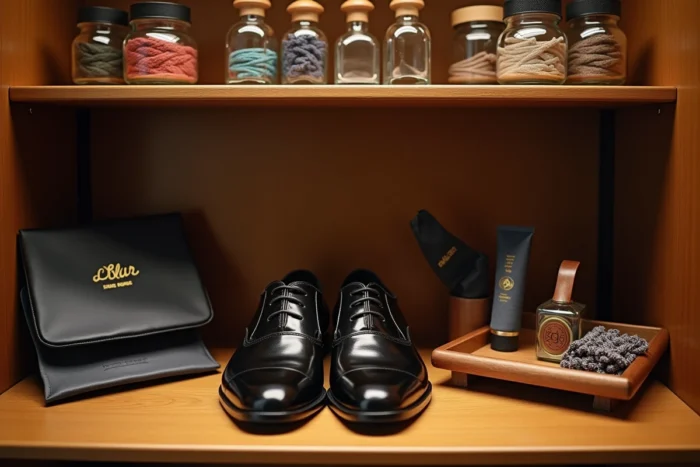
New laces on a tired pair of shoes can radically change their look. The original laces fray, yellow, and lose their shape. Replacing them costs a few euros and takes two minutes.
Waxed laces hold knots better and slip less. They are suitable for derbies and oxfords. Round cotton laces fit boots and casual shoes. Changing the color of the laces personalizes a pair without any permanent alterations.
A lace slightly wider than the original gives a bolder look to the shoe. A thin, flat lace, on the other hand, adds discretion to a dress model. This play of proportions is a style lever that most people overlook.
Durability and Eco-Design: An Angle to Watch for Your Next Purchases
The European regulation ESPR, adopted in April 2024, expands eco-design obligations to many products, including shoes. This regulation encourages manufacturers to rethink the reparability and lifespan of their products.
For consumers, this translates into gradual access to accessories designed to last longer: more technical replaceable soles, protective creams formulated for extended wear, or even reusable overshoes. Investing in maintenance means extending the lifespan of each pair, which mechanically reduces the volume of shoes thrown away each year.
Maintenance accessories are not a luxury reserved for high-end shoe enthusiasts. They meet a concrete need: to keep shoes in good condition longer, regardless of their purchase price. A shoe tree, a cream, a brush, and new laces form a basic kit whose effect is noticeable at first glance.