
Tin is the least liquid non-ferrous metal quoted on the LME, and it is precisely this structural characteristic that amplifies every market signal. Understanding tin price trends requires going beyond the usual macro analyses to delve into the fine mechanics of visible stocks, spot premiums, and regulatory constraints that reshape supply.
Visible LME and Shanghai Stocks: The True Driver of Tin Volatility
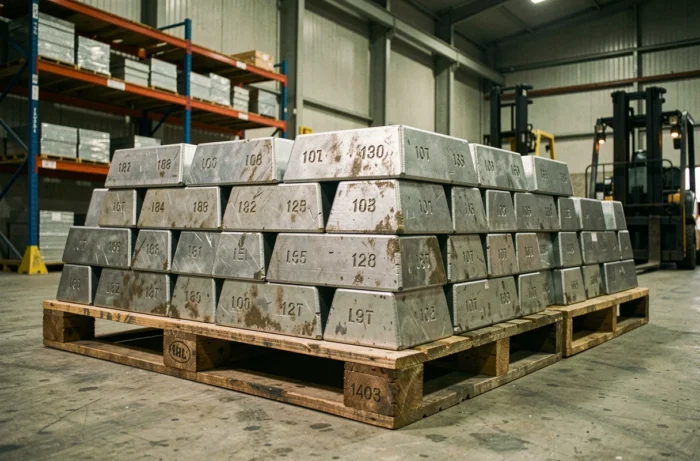
The price dynamics of tin are not primarily reflected in sector demand curves. They are reflected in approved warehouses. In August 2026, tin stocks in LME warehouses fell to around 5,400 to 5,800 tons, a historic low. The destocking movement removed more than 40% of the volumes in just a few weeks.
This critical level generates a high spot premium (backwardation) that increases the cost of immediate access to physical metal. Spot contracts are then trading significantly above futures contracts, indicating that the market anticipates a prolonged tightening rather than a simple temporary adjustment.
We observe that this sensitivity to stock announcements transforms each weekly LME publication into a catalyst for volatility. A withdrawal of a few hundred tons is enough to trigger movements of several percent in a session, whereas copper or aluminum would absorb the shock without flinching due to incomparably deeper reserves.
To follow the price of tin on Conso Crédit, these stock data constitute the primary indicator to monitor before making any position.
Indonesian Regulation on Artisanal Tin: A Regulatory Supply Shock
Consumer articles often mention “supply tensions” without specifying their recent regulatory origin. Indonesia, the world’s largest exporter, initiated a tightening of the framework for artisanal tin extraction in 2026, particularly on the islands of Bangka and Belitung.
This regulatory framework now requires artisanal operators to sell their production exclusively to the formal sector, through approved smelters. The stated goal is twofold: environmental traceability and mining taxation. In practice, this reduces the volume of refined tin available for export during the compliance phase.
Indonesian supply is contracting through regulatory means, not just geological ones. This distinction is crucial for market interpretation. A depleting deposit produces a gradual and predictable decline. Regulation that restricts sales channels creates a discreet shock, difficult to model, and often underestimated by investors who only follow raw production data.
Impact on Physical Premiums in Southeast Asia
The tightening Indonesian regulations are pushing Asian industrial buyers towards other sources, notably Burmese and Congolese production, which is itself subject to geopolitical constraints. Physical premiums in Southeast Asia reflect this increased competition for available metal.
Demand Related to Semiconductors and AI Infrastructure
Solder alone accounts for half of global tin demand. Every chip, every motherboard, every server connector consumes it. The rise of data centers dedicated to artificial intelligence structurally amplifies this demand.
We recommend monitoring three indicators to anticipate price pressure on the demand side:
- Quarterly high-performance server orders published by major hyperscalers, which directly translate into a need for tin-based solder alloys
- Utilization rates of semiconductor foundries in Asia, an advanced indicator of industrial consumption of refined tin
- Announcements of new data center constructions, each unit mobilizing several tons of solder over the duration of the project
Demand related to data technologies is driving the tin market towards a structural deficit. According to Coface’s analysis, this supply deficit could materialize as early as 2026, the first time since 2021.

Liquidity and Flash Crash Risk on the LME Tin Contract
The tin flash crash at the LME remains a textbook case. In just a few seconds, the price plummeted by 9% to $31,305 per ton before quickly returning to more normal levels, ending the session down 4.3% at $33,921 per ton.
The low liquidity of the tin contract explains this vulnerability. Compared to copper, aluminum, or nickel, tin is the LME metal most exposed to liquidity shocks. A medium-sized order on a shallow order book is enough to trigger a sharp drop that market-making algorithms struggle to absorb.
For investors positioned in this market, this reality imposes operational precautions that high-liquidity base metals do not require:
- Favor limit orders over market orders, even under normal conditions, to avoid execution at aberrant prices
- Monitor the depth of the order book in real-time rather than just the last traded price
- Incorporate the bid-ask spread as a market stress indicator: a sudden widening signals a withdrawal of market makers
The Role of the LME in Regulating Incidents
After the flash crash, the LME indicated it would examine the circumstances of the transactions and has tools to ensure the market functions properly. The reopening of the Ring (the open outcry) for certain contracts partially addresses this issue by adding a layer of price discovery complementary to electronic trading.
The tin market remains a space where reading physical fundamentals (stocks, mining regulations, industrial demand) takes precedence over pure technical analysis. An investor who ignores the level of LME stocks or Indonesian regulatory developments is navigating blindly. The combination of supply constrained by regulation and demand driven by electronics and AI shapes a persistently tight market, where every ton counts.