The markets of Corinth operate on a weekly cycle that most tourist guides do not specify. The laïki agora (popular market) takes place on a fixed day of the week, according to a municipal calendar that varies from year to year. Confusing this open-air market with the permanent shops in the city center means missing out on the short supply chain that still structures the agricultural economy of Corinthia.
Product Regulation and Craft Labeling in Corinthia
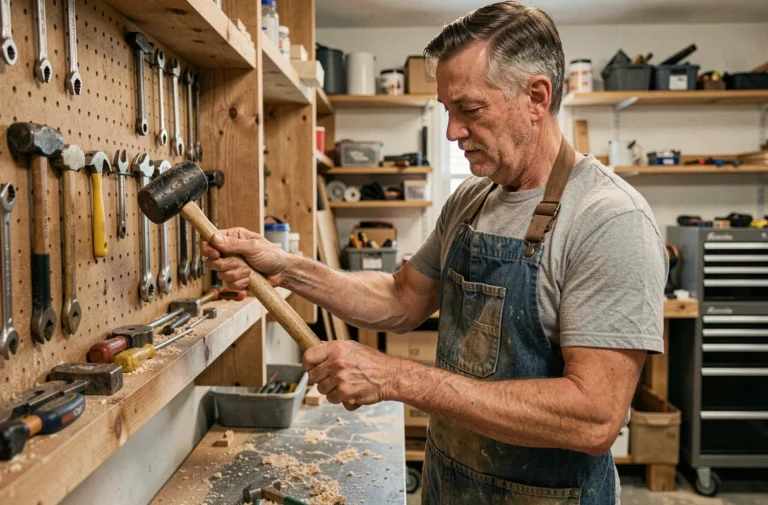
The craft industry in the Peloponnese is facing a phase of accelerated compliance. The European Commission’s infringement procedures against Greece, documented in 2026, require the state to revise administrative obligations for small businesses and craft workshops. In practice, this directly affects producers who sell at the markets of Corinth.
The product categories most affected are decorative items, natural cosmetics (olive oil soaps, herbal balms), textiles, and artisanal food products. Labeling must now mention the composition and origin of raw materials, even for a soap sold at a market stall.
We observe that this regulatory constraint has a sorting effect: artisans who work with traceable local raw materials (olive oil from Corinthia, clay from the Peloponnese) adapt more easily than those who import components. For the informed buyer, a properly labeled product at a Corinthian market is an indicator of seriousness, not just a bureaucratic detail.
Exploring the traditional markets of Corinth with this framework allows for a quick distinction between a structured workshop and a seller of generic souvenirs.
Corinthian Ceramics and Utility Pottery: Two Distinct Sectors
Ceramics are the primary craft associated with Corinth, but the term encompasses two realities that have nothing in common on a market stall.
The first sector is decorative and heritage-based. It reproduces the motifs of ancient Corinthian ceramics (animal friezes, rosettes, black figures). These pieces are intended for visitors to the archaeological site and sold in adjacent shops or at tourist markets. Their production is often semi-industrial.
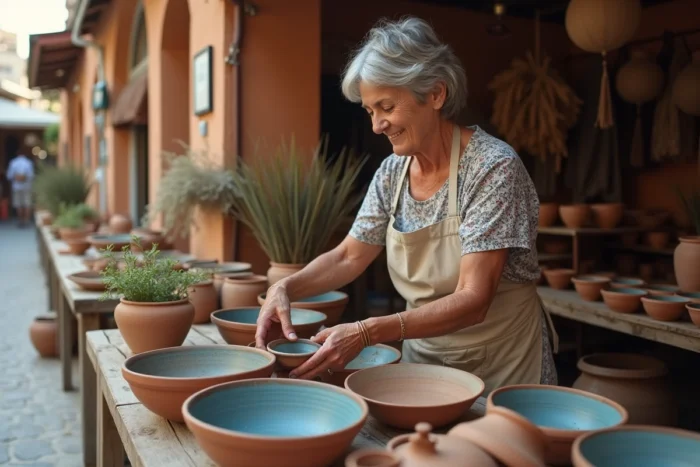
The second sector is utilitarian. Potters from the department produce unglazed terracotta storage containers, used locally for storing olives, oil, or cheese. These pieces, less photogenic, reflect a know-how passed down in family workshops in northeastern Peloponnese.
At an open-air market, distinguishing the two is simple:
- Utility pottery is heavy, unpainted or with a natural slip, and sold at modest prices compared to decorative pieces
- Decorative ceramics reproduce recognizable ancient motifs, and are signed or stamped with the name of a workshop
- Hybrid pieces (utilitarian shape, decoration inspired by antiquity) generally indicate an artisan who masters both registers
A potter who offers both ranges at the same stall is often the best interlocutor for understanding local techniques.
Agricultural Products at the Markets of Corinth: Corinthian Raisins and Beyond
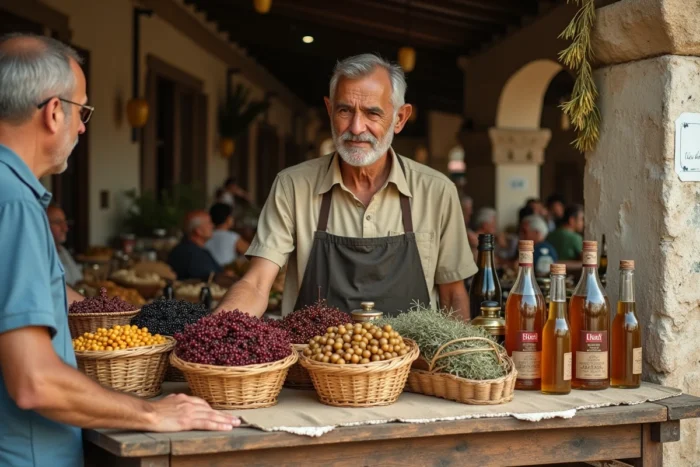
Corinthian raisins remain the signature product of the region. Corinthia has historically been the production area for this small seedless black grape, exported throughout Europe for centuries. At the markets, it is sold in bulk, often directly by the producer.
We recommend paying attention to texture and color. A naturally sun-dried Corinthian raisin has an irregular dark brown hue, whereas industrial drying results in a uniform black. The taste difference is clear: sun drying preserves a fruity acidity that the industrial process flattens.
Beyond raisins, Corinthian stalls reflect the agricultural diversity of the department:
- Koroneiki variety olive oil, the most common in the Peloponnese, with a marked bitterness
- Citrus fruits (oranges, lemons) from the coastal plain, available in winter and spring
- Thyme and wildflower honey, produced in the hilly areas south of the city
- Dried herbs (oregano, thyme, sage) sold in bunches or bags
Natural Materials and Design Trends: A Ripple Effect on Corinthian Craftsmanship
Decoration and design trends in Europe for 2026 favor a return to raw materials: stone, unglazed terracotta, linen, untreated wood. This orientation benefits artisans in the Peloponnese who have worked with these materials for generations without ever abandoning them.
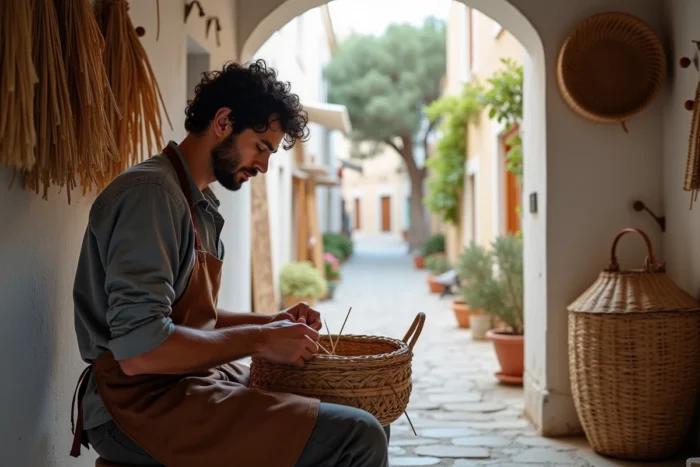
Specifically, the demand for unglazed terracotta objects, textiles made from natural fibers, and olive wood utensils is increasing at Greek markets. Corinthian workshops producing functional objects from local materials are experiencing a resurgence of interest that goes beyond the usual tourist clientele.
This phenomenon also creates a risk. Resellers offer items made outside Greece, presented as artisanal. At a market in Corinth, checking the origin remains the basic reflex: a local artisan will be able to explain their technique, name their clay or wood essence, and describe their drying process.
Identifying a Local Artisan at a Corinthian Market
A producer or artisan from the department typically displays their tax number (AFM) at their stall, in accordance with Greek regulations. The absence of this number does not necessarily indicate fraud, but its presence guarantees that the seller is registered with the local tax administration.
Conversation remains the best filter. A Corinthian artisan will talk about their workshop, their raw material suppliers, and the firing time of their pieces. A reseller will limit themselves to price and available size. This difference can be perceived in just a few exchanges, even with approximate Greek.
The markets of Corinth do not compete in size with those of Athens or Thessaloniki. Their interest lies precisely in this smaller scale, where each stall represents an identifiable sector and where craftsmanship remains linked to a specific agricultural and geological territory.