
Naturopathy, phytotherapy, osteopathy, acupuncture: these practices share a common promise, that of mobilizing the body’s resources rather than merely addressing an isolated symptom. Their popularity is growing in France, but their regulatory status and financial coverage vary significantly from one discipline to another.
Comparing these natural healing methods based on objective criteria (official recognition, reimbursement, practitioner regulation) allows us to distinguish what falls within a structured framework from what remains on the margins.
Reimbursement for alternative medicine in France: what is covered by Social Security and mutual insurance
The first filter for evaluating a natural practice is often financial. Since January 1, 2021, homeopathic medicines are no longer reimbursed by Health Insurance, following a gradual withdrawal based on the HAS opinion issued in 2019.
Osteopathy is in a comparable situation: its services are not covered by Social Security. Reimbursement relies exclusively on complementary health insurance.
For most unconventional practices, the main financial lever now comes from “alternative medicine” packages offered by mutual insurance, based on two models: a global annual package or a per-session package. This distinction radically changes the out-of-pocket costs depending on the frequency of consultations.
| Practice | Social Security Reimbursement | Common Mutual Coverage | Protected Title / State Diploma |
|---|---|---|---|
| Osteopathy | No | Per-session package (variable) | Protected title (decree 2007) |
| Acupuncture (by doctor) | Yes (medical act) | Supplement according to contract | Doctor with additional training |
| Homeopathy | No (since 2021) | Annual package according to mutual | Homeopathic doctor |
| Naturopathy | No | Annual package according to mutual | No protected title |
| Chiropractic | No | Per-session package (variable) | Protected title (decree 2011) |
A point often overlooked concerns the Solidarity Health Supplement (CSS), intended for the lowest incomes. It excludes non-conventional medicine from its care basket, leaving aside almost all natural practices for vulnerable populations. Understanding natural healing methods also involves measuring this access gap based on the patient’s financial resources.
Naturopathy and osteopathy: two very different levels of regulation
Online competitors often group all practices under the label “alternative medicine.” In practice, the level of regulation varies widely.
Osteopathy has had a protected title since 2007. Only practitioners graduated from an accredited institution can use the title of osteopath. Additionally, certain manipulations are explicitly regulated and limited by law, particularly intra-pelvic manipulations which are subject to specific restrictions.
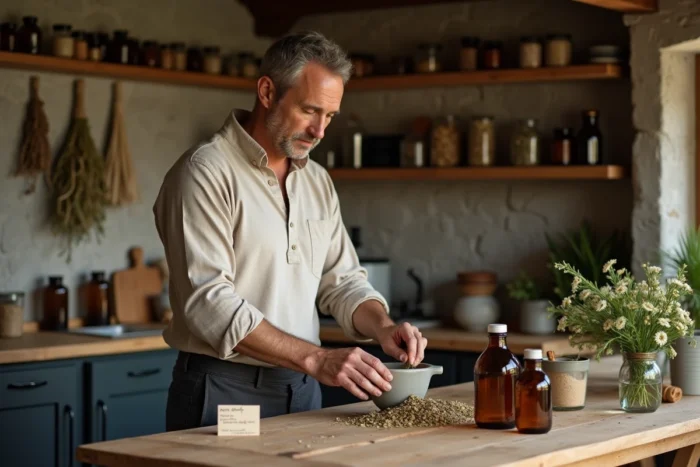
Naturopathy has no protected title in France. Anyone can declare themselves a naturopath without state-validated training. The World Health Organization classifies naturopathy among methods that promote balance and vitality, but this recognition does not translate into a legal framework in France. Training varies from a few weeks to several years depending on private schools.
- Check if the practitioner holds a diploma issued by an institution registered in the National Directory of Professional Certifications (RNCP), which is the case for osteopathy and chiropractic but not for naturopathy
- Consult the registry of declared professionals with the Regional Health Agencies (ARS) for osteopathy and chiropractic
- Ask the naturopath about their specific training and duration, in the absence of an official framework
This disparity in regulation does not imply that one practice is more effective than another. It indicates that the level of patient protection differs depending on the chosen discipline.
Phytotherapy and nutrition: the common foundation of natural approaches
Most natural practices converge on one point: lifestyle and diet are the primary levers of action. Naturopathy, in particular, places a central emphasis on nutrition and the use of plants.
Phytotherapy utilizes the properties of plants in various forms (herbal teas, extracts, oils). It differs from homeopathy by its active principle: phytotherapy relies on measurable concentrations of plant substances, whereas homeopathy uses extreme dilutions whose mechanism of action remains scientifically controversial.
In contrast, phytotherapy shares with therapeutic nutrition the same goal: to strengthen the body’s natural defenses rather than suppress a symptom. This principle, often attributed to the Hippocratic legacy, structures most naturopathy consultations.
Complementary techniques such as stress management, breathing exercises, or hydrotherapy are added to this nutritional foundation. They aim to restore a global balance in the body, which practitioners refer to as “terrain.”
Safety and limits of unconventional practices
The Ministry of Health lists several hundred unconventional health practices. Not all present the same level of risk, but none should replace conventional medical treatment when it is necessary.
Several points of vigilance emerge:
- Interactions between medicinal plants and drug treatments are documented (St. John’s Wort and oral contraceptives, for example) and require systematic notification to one’s treating physician
- Abusive sectarian practices using the pretext of natural healing are monitored by Miviludes, which regularly alerts on unqualified practitioners encouraging the cessation of treatments
- The absence of a regulatory framework for certain practices leaves the patient solely responsible for verifying the practitioner’s qualifications
These limits do not undermine the value of a complementary approach. The goal is to combine conventional medicine and natural practices, not to oppose them. The term “integrative medicine” precisely designates this articulation between the two approaches.
The zero reimbursement by Social Security for the majority of these practices, coupled with the absence of a protected title for some of them, places the responsibility for selection on the patient. Verifying qualifications, cross-referencing opinions, and maintaining dialogue with one’s treating physician remains the only reliable method to benefit from these approaches without risk.